

Smart Technology, Smarter People: the Critical Balance in Safeguarding

A nursery manager leverages technology to flag Safeguarding risks while using her judgement and her expertise to manage them
What platforms can verify - and what only you can see
At Kalendit, we verify every practitioner's DBS, qualifications, and references before they can accept a single booking. We check employment gaps and assess safeguarding knowledge through an in-app questionnaire requiring 90% correct answers. We automatically track expiry dates and renewals, ensuring credentials stay current without manual checking.
Our technology makes vetting more accurate, rigorous, and up-to-date than traditional systems. AI can suggest relevant matches with local staff based on qualifications, availability, and past performance.
But here's what remains yours: the authority to decide who's right for your setting.
Technology can verify credentials, test knowledge, and track performance. Only you can make the final call—because you're accountable to Ofsted, to parents, and to the children in your care.
What Digital Vetting Can (and Can't) Do
What Our Platform Verifies
We check the paperwork:
Enhanced DBS (Child Workforce, max 2 years old)
Qualifications (Level 2/3, Paediatric First Aid)
Professional references (we actually call them)
Employment history (including gaps)
Right to work and identity
We test their knowledge:
In-app safeguarding and best practices questionnaire
90% pass rate required - no exceptions
Covers EYFS requirements, safeguarding scenarios, behavior management, health and safety
We keep credentials current:
Automatic tracking of DBS expiry dates, First Aid renewals, qualification validity
Practitioners are suspended when credentials expire until renewed
Combined manual and automated checks to ensure compliance
We track performance:
Ratings from nurseries across multiple settings
Automatic suspension below 3 stars or after concerning feedback
This is more rigorous than traditional agencies or platforms. But it's still not sufficient.
Read out Blog on Why Data-Driven Decisions Matter More than Ever for Nurseries
We are hosting a vital 30-minute webinar focused on safer recruitment practices in early years settings, with a focus on online safety. Learn how to develop and enforce nursery policies around photography, social media use, and individual conduct to protect children and staff alike.
What Technology Can't Tell You
No system can verify:
How someone interacts with children when stressed
Their body language and tone with a distressed toddler
Whether they apply knowledge correctly in real situations
How they respond to feedback or correction
Whether they fit your team dynamic and setting culture
A clear DBS tells you someone hasn't been caught. It doesn't tell you they're good with children.
A 90% test score tells you they know theory. It doesn't tell you they're patient, observant, or kind in practice.
This is why safeguarding will always require your professional judgment.

Safeguarding technology flags risks quickly, but misses critical context. Human expertise remains essential for protecting children in the digital age
The First 30 Minutes: What Your Team Should Observe
Experienced managers know: you can learn more in the first half-hour than any certificate reveals.
Green Flags
On arrival:
Arrives 10-15 minutes early (time to prepare properly)
Introduces themselves to all staff professionally
Asks about key policies before children arrive
Critical questions to listen for:
"Who's your Safeguarding Officer?"
"What's your approach to challenging behavior?"
"Are there any children with specific needs today?"
"Where should I store my phone and belongings?"
These questions show safeguarding awareness in action, not just on a test.
First interactions with children:
Gets on children's level physically when talking
Asks permission before helping ("Can I help you with your coat?")
Waits for children to engage rather than forcing interaction
Observes your team's routines before jumping in
Red Flags - Act Immediately
Serious concerns:
Rough handling (grabbing wrists instead of hands)
Using phone in children's areas without asking
Overly familiar too quickly (asking for hugs, lap-sitting)
Alone with children without checking your policy first
Concerning patterns:
Never asks questions (pretends to know everything)
Dismissive of your setting's approach
Poor communication with your team
Doesn't observe before acting
Trust your team's instinct. If something feels off, don't ignore it.
Strengthen your safer recruitment practices in 30 minutes. This webinar covers essential nursery policies for photography, social media use, and staff conduct—protecting both children and your team.
Real-World Scenarios: Where Judgment Matters
Scenario 1: Challenging Behavior
A child is having a meltdown, throwing toys.
What our questionnaire tests: Knowledge that you don't use "naughty corner" or time-out, understanding of positive behavior management.
What you need to observe:
Do they stay calm?
Do they get on the child's level?
Do they focus on emotions ("I can see you're upset")?
Do they ask your team for guidance on your specific approach?
One practitioner might know theory perfectly but freeze under pressure. Another might handle it beautifully despite a lower test score.
Scenario 2: Suspected Injury
A child arrives with a bruise. The parent says they fell at home.
What our questionnaire tests: Knowledge of safeguarding procedures, when to report concerns.
What you need to observe:
Do they document it properly?
Do they report to your Safeguarding Officer immediately?
Do they keep it confidential from other staff?
Do they continue to observe the child appropriately?
Theory tells you what to do. Judgment tells you how seriously to take it.
Scenario 3: Sudden Staff Shortage
Your deputy calls in sick. You're short-staffed in the baby room and book supply staff to fill in.
What our vetting confirms: full & relevant qualification, clear enhanced DBS check, valid ID and Right to Work, satisfactory references and no employment gaps.
What you need to assess:
Can they adapt quickly to a new age group?
Do they ask about routines and specific children's needs?
Are they comfortable saying "I haven't worked with babies recently - please show me your approach"?
How does your baby room team feel working with them?
Credentials open the door. Adaptability and communication keep children safe.
Building Your Trusted Pool
Use Kalendit's tools strategically:
First shift:
Pair with your strongest room leader
Check in after first hour, before lunch, end of day
Document observations (even positive ones)
Decide: Would we book again?
Second shift:
Still supervised, but assess independence
Note improvements or repeated concerns
Check consistency with your team
Third shift onwards:
If consistently good, add to Favourites (they see your bookings first)
If concerns persist, don't rebook and report to Kalendit
Build a roster of practitioners your team trusts through direct experience.
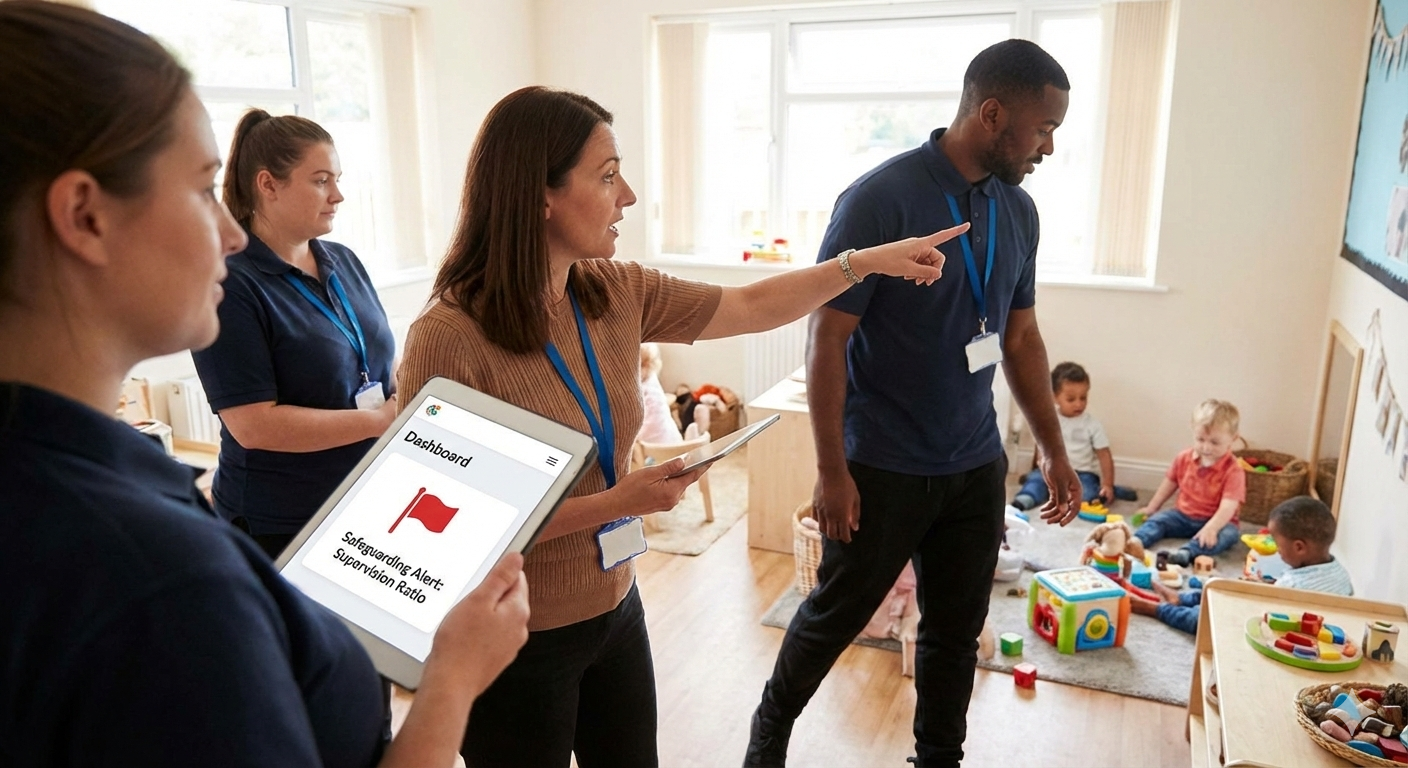
The powerhouse combo: in-person induction, ongoing training, and smart technology working together
What Makes Kalendit Different - And What Doesn't
What we do better than traditional agencies:
Verify employment gaps (no unexplained periods)
Test safeguarding knowledge (90% pass required)
Automatically track credential validity (practitioners suspended when expired)
Transparent performance ratings across settings
Immediate consequences for poor performance
What we don't do - and neither does any platform:
Replace your professional judgment
Supervise practitioners in your setting
Assess cultural fit with your team
Observe real-time interactions
Make the final call on who's right for your children
We provide the highest standard of digital vetting. You provide the irreplaceable human assessment.
Questions about our vetting or how to use our rating system effectively?
Email: ops@kalendit.com
Join us for a vital 30-minute webinar focused on safer recruitment practices in early years settings, with a special emphasis on online safety. Learn how to develop and enforce nursery policies around photography, social media use, and individual conduct to protect children and staff alike.